
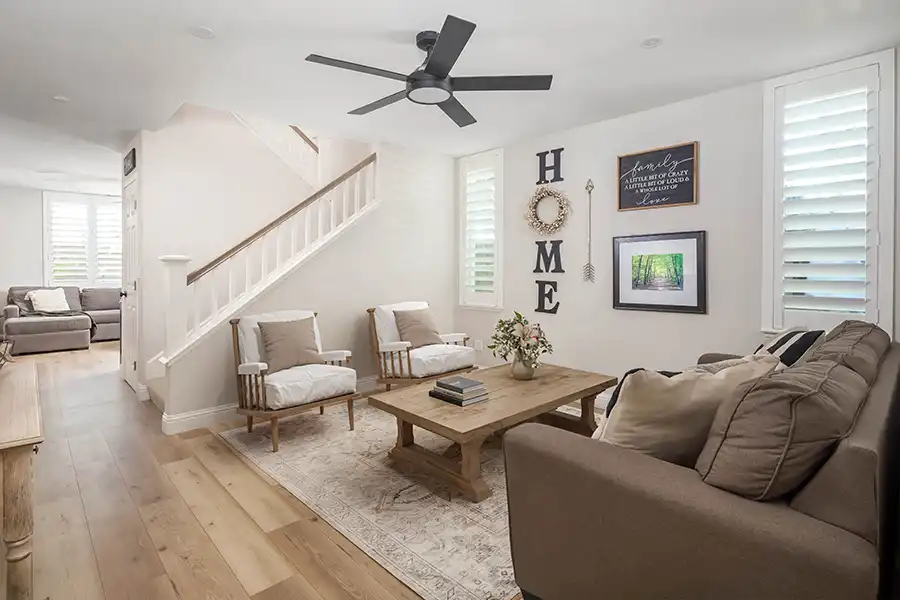
A high-end home remodel can do more than create a beautiful kitchen, expand a primary suite, or modernize an outdated floor plan; in Concord, it can also improve how a home produces, consumes, and manages energy by coordinating efficiency, electrification, building-envelope improvements, and renewable energy into one integrated system designed to move the property toward net-zero energy performance.
A remodel is not considered net zero simply because solar panels are installed. After all, a home with inefficient insulation, leaky ducts, outdated windows, oversized HVAC equipment, or inefficient appliances can still consume excessive energy despite generating solar power.
A high-performance remodel instead begins by reducing the home’s energy demand, improving the efficiency of the systems that remain, electrifying appropriate equipment, and then incorporating renewable energy to offset the home’s annual consumption.
For Concord homeowners pursuing a luxury, green, or highly specialized renovation, this approach can unite sustainability with architectural design, advanced technology, comfort, and long-term performance, creating a home that maintains more consistent temperatures, operates more quietly, uses less energy, and is better prepared for California’s evolving energy landscape.
California’s Energy Code establishes efficiency requirements for additions and alterations to existing homes, while a net-zero-oriented remodel can intentionally build on those requirements by coordinating energy improvements with broader goals for comfort, resilience, energy independence, and environmental responsibility.
Key Takeaways
- A net-zero remodel focuses on the home’s overall energy performance rather than relying solely on solar panels.
- Reducing energy demand first can help homeowners design a more appropriately sized and effective renewable-energy system.
- Insulation, air sealing, high-performance windows, and efficient HVAC can strengthen the building envelope while improving indoor comfort.
- Electrification can replace fossil-fuel-dependent equipment with efficient heat-pump and electric technologies.
- Solar photovoltaic panels can generate renewable electricity to help offset the home’s remaining annual energy consumption.
- Battery storage can store excess electricity, improve energy flexibility, and provide added resilience during certain outages.
- Luxury finishes and advanced sustainable technologies can be incorporated into the same high-performance remodeling project without sacrificing design quality.
- Concord’s climate makes thoughtful shading, ventilation, insulation, passive design, and efficient cooling particularly valuable.
- A whole-home energy strategy should be established before major remodeling decisions are finalized.
- Successful net-zero projects coordinate architecture, construction, electrical, HVAC, plumbing, insulation, windows, appliances, and renewable energy as interconnected systems.
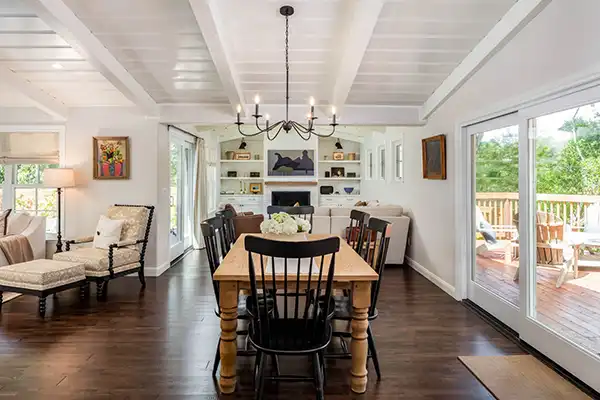
What Does “Net Zero” Mean For A Home Remodel?
A net-zero-energy home generally produces approximately as much renewable energy over the course of a year as it consumes, making net zero a broader performance goal than simply improving efficiency or adding solar.
An energy-efficient home may use substantially less electricity than a conventional property while still relying heavily on grid electricity, whereas a solar-equipped home can generate renewable power without necessarily having low energy demand; a net-zero strategy combines demand reduction, efficiency, electrification, renewable generation, and energy management.
This sequence is important because installing a large solar array before improving insulation, windows, air sealing, HVAC efficiency, and appliances may offset some consumption without addressing the underlying inefficiencies of the building.
By improving the building envelope first, homeowners can make the house easier to heat and cool, allowing HVAC equipment to be properly sized while efficient appliances and water-heating systems further reduce demand before solar is designed around the home’s remaining energy requirements.
For a luxury remodel in Concord, this whole-home approach is especially useful because major investments in kitchens, HVAC, electrical systems, windows, roofing, lighting, and exterior improvements can be coordinated around a single energy-performance strategy instead of being treated as unrelated upgrades.
1. Start With A High-Performance Building Envelope
A strong building envelope is one of the foundations of a net-zero-oriented remodel because well-insulated and properly sealed walls, roofs, floors, windows, doors, and other exterior assemblies help the home maintain desired indoor temperatures with less mechanical energy.
The building envelope includes exterior walls, roof and attic assemblies, windows, exterior doors, floors, insulation, air barriers, and weather sealing, all of which work together to limit unwanted heat transfer and air movement.
When conditioned air escapes through gaps, insufficient insulation allows outdoor temperatures to penetrate the structure, or inefficient windows permit excessive heat gain or loss, the HVAC system must operate harder to maintain comfort.
Because remodeling often exposes walls, ceilings, floors, and exterior assemblies, construction can provide an ideal opportunity to correct these weaknesses before new finishes conceal them.
Insulation Matters
High-quality insulation reduces heat transfer through the building envelope, with potential improvements involving attic, wall, floor, or other targeted insulation depending on the home’s construction, renovation scope, moisture conditions, climate, and applicable requirements.
Air Sealing Is Equally Important
Insulation slows heat transfer, while air sealing limits uncontrolled movement through cracks, gaps, penetrations, and other openings, making both measures important to overall building performance.
Even a heavily insulated home can lose conditioned air through electrical fixtures, plumbing penetrations, doors, windows, attic access points, ductwork, wall intersections, recessed lighting, and mechanical penetrations if these areas are not properly sealed.
2. Upgrade Windows And Exterior Doors
High-performance windows and exterior doors can simultaneously enhance the appearance of a luxury remodel and improve temperature control, acoustic comfort, daylighting, solar management, and resistance to drafts.
Because Concord can experience significant summer heat, window selection should account for thermal performance, orientation, glazing characteristics, and exposure to direct sunlight.
3. Design HVAC Around The Improved Home
HVAC equipment should be evaluated according to the remodeled home’s actual heating and cooling requirements rather than simply replacing an existing system with equipment of the same size.
Improvements to insulation, air sealing, windows, and other envelope components can significantly change heating and cooling loads, making proper system sizing an important part of the remodeling process.
For homeowners pursuing an all-electric or net-zero-oriented renovation, heat pump HVAC can provide both heating and cooling while transferring heat instead of relying primarily on combustion or resistance heating.
4. Electrify The Home
Electrification is a common component of high-performance remodeling because systems traditionally powered by natural gas or other fossil fuels can often be replaced with efficient electric alternatives.
Potential upgrades include heat-pump HVAC, heat-pump water heaters, induction cooking, heat-pump clothes dryers, and other high-efficiency electric appliances.
A Concord remodel does not necessarily need to electrify every system immediately, because the appropriate approach depends on the existing infrastructure, electrical capacity, project goals, budget, and applicable requirements.
5. Consider An Energy-Efficient Water Heating System
Water heating can represent a significant share of residential energy consumption, making the water-heating system an important part of a comprehensive high-performance remodeling strategy.
A heat-pump water heater can support an all-electric home by using electricity to transfer heat rather than generating heat through conventional combustion.
A remodel also provides an opportunity to improve hot-water performance by evaluating pipe insulation, distribution routes, fixture efficiency, recirculation systems, equipment location, electrical requirements, and household demand.
6. Install Solar Photovoltaic Panels
Solar photovoltaic panels convert sunlight into electricity for household use and can provide the renewable-energy component needed to offset a high-performance home’s remaining annual energy consumption.
Solar should generally be considered after reducing energy demand because the size of the renewable-energy system depends on factors such as household consumption, roof characteristics, solar exposure, equipment efficiency, and usage patterns.
Roof planning should therefore occur early when a project also involves solar, roof replacement, skylights, roofline changes, or other architectural modifications so these elements can be coordinated rather than addressed separately.
7. Add Battery Storage For Greater Resilience
Because solar panels generally generate the most electricity during daylight while household demand can increase later in the day, battery storage can capture excess electricity and make it available when generation falls.
Depending on the system and applicable utility arrangements, batteries may help homeowners store excess solar generation, use stored electricity later, reduce reliance on grid power at certain times, maintain selected loads during outages, and improve overall energy-management flexibility.
8. Upgrade The Electrical Infrastructure
A remodel that adds heat-pump HVAC, heat-pump water heating, induction cooking, electric laundry equipment, EV charging, solar, and battery storage can substantially change the home’s electrical requirements.
This makes an early evaluation of the electrical service and distribution system particularly important in older Concord homes where existing infrastructure may not have been designed for multiple high-demand electric systems.
Depending on the property’s capacity and project scope, the electrical plan may require a panel upgrade, load-management strategy, new circuits, subpanels, or other improvements.
9. Use Energy-Efficient Lighting
Although lighting typically consumes less energy than major mechanical systems, a luxury remodel can include dozens of fixtures, making efficient lighting and controls valuable components of the overall energy strategy.
Modern LED lighting can reduce electricity consumption while supporting sophisticated design through recessed fixtures, under-cabinet lighting, architectural accents, dimming, occupancy sensors, daylight-responsive controls, smart controls, and carefully designed exterior illumination.
10. Choose Efficient Appliances
High-efficiency appliances can further reduce household energy demand, particularly in luxury kitchens where refrigerators, dishwashers, induction cooktops, ovens, ventilation systems, and laundry equipment can collectively represent substantial electrical loads.
Induction cooking can provide precise, premium cooking performance while supporting an all-electric strategy, and efficient dishwashers and refrigeration can reduce ongoing energy and water consumption.
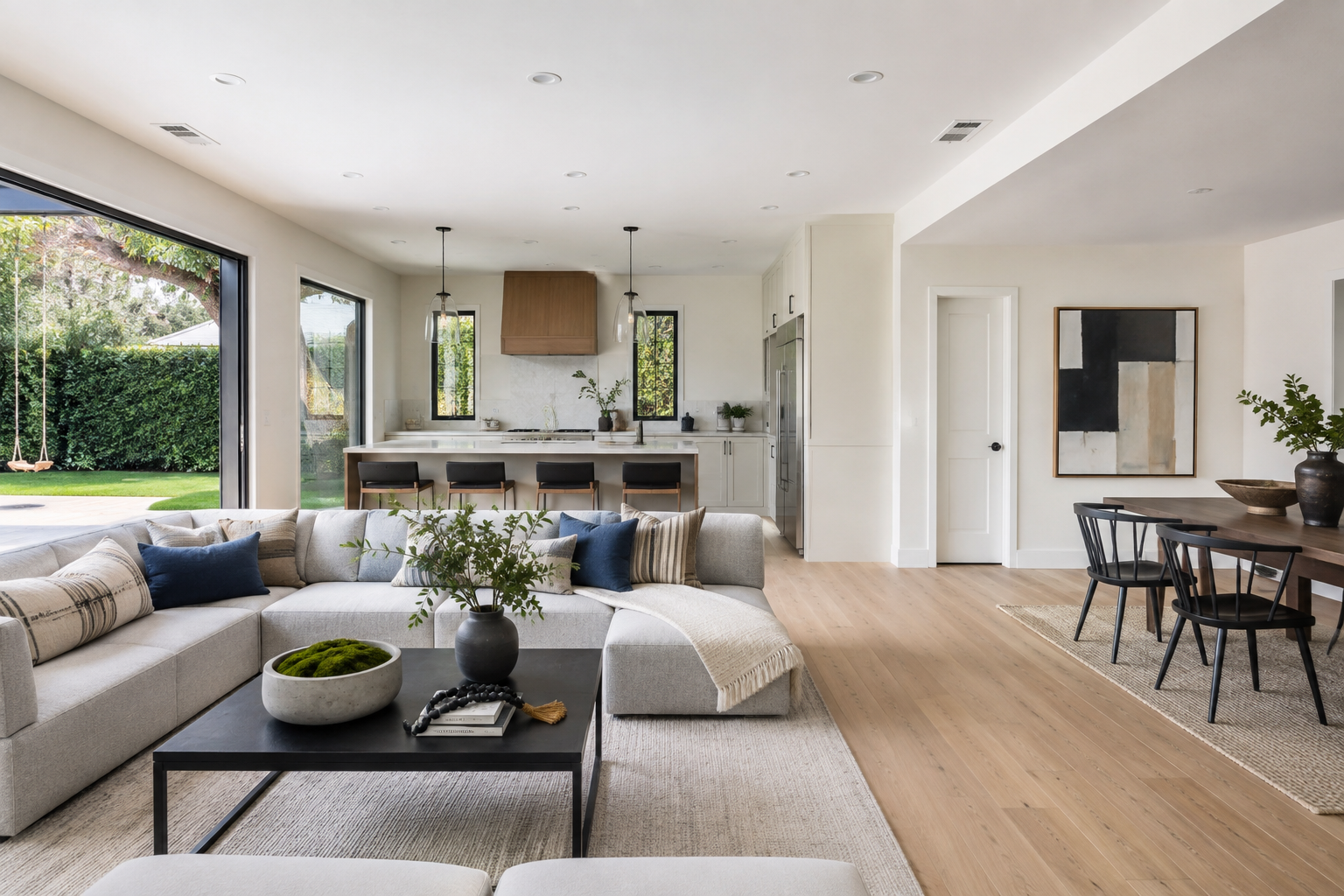
11. Improve Ventilation And Indoor Air Quality
A tighter and more energy-efficient home requires a deliberate ventilation strategy because reducing uncontrolled air leakage improves energy performance while still requiring adequate fresh-air exchange.
A net-zero-oriented remodel should therefore account for how fresh air enters the home and how stale air, moisture, odors, and pollutants are removed from kitchens, bathrooms, laundry rooms, bedrooms, and other tightly sealed spaces.
12. Use Passive Design To Reduce Energy Demand
Passive design can reduce mechanical heating and cooling requirements by using the home’s orientation, daylight, natural ventilation, shading, overhangs, window placement, thermal mass, landscaping, and exterior shade as part of the energy strategy.
In Concord, thoughtful shading can be particularly valuable during hotter periods because exterior shade can prevent solar heat from entering the building in the first place, reducing cooling demand while preserving natural daylight.
13. Incorporate Sustainable Materials
Although net-zero energy and sustainable remodeling are related, they are not identical, because a home can perform exceptionally well energetically while still relying on materials chosen without significant consideration for environmental impact.
Homeowners pursuing a broader green-remodeling strategy can evaluate materials according to durability, recycled or reclaimed content, responsible sourcing, low-emitting characteristics, local availability, repairability, and expected lifespan.
14. Consider Water Efficiency
A comprehensive sustainable remodel should address water consumption alongside energy use by incorporating efficient fixtures and systems that reduce demand without compromising comfort.
Potential improvements include low-flow faucets, efficient shower fixtures, water-efficient toilets, efficient dishwashers and washing machines, smart irrigation controls, and drought-tolerant landscaping.
15. Integrate Smart Home Energy Management
Smart-home technology can make energy performance easier to monitor and manage by providing homeowners with visibility into electricity consumption, solar production, battery status, HVAC operation, indoor temperatures, lighting, appliance use, and energy schedules.
Smart thermostats can adjust heating and cooling according to occupancy and schedules, while energy-monitoring systems can identify unusual consumption and smart controls can coordinate multiple systems to prevent unnecessary simultaneous energy demand.
16. Net Zero Does Not Mean Sacrificing Luxury
Sustainability does not require homeowners to sacrifice luxury because many high-performance improvements can directly enhance the qualities associated with a premium home, including stable temperatures, quieter rooms, better indoor air quality, natural daylight, sophisticated lighting, high-quality windows, seamless indoor-outdoor living, advanced controls, efficient appliances, comfortable bathrooms, and reliable hot water.
17. Why Existing Homes Require Special Planning
Unlike a new home that can be designed around net-zero principles from the beginning, an existing property must accommodate conditions such as its framing, electrical system, plumbing, wall cavities, roof geometry, windows, HVAC ductwork, structural limitations, existing finishes, architectural character, and available space.
These constraints make early planning especially important because the remodeling team needs to understand how proposed improvements will interact with the existing structure and applicable California requirements before construction begins.
18. A Net-Zero Remodel Should Begin With An Energy Assessment
Before selecting solar panels, HVAC equipment, windows, or appliances, homeowners should establish a baseline understanding of how the existing home performs and where energy is being lost or unnecessarily consumed.
An energy assessment can evaluate building-envelope performance, duct leakage, HVAC operation, insulation levels, electricity consumption, appliance loads, and other conditions that help identify which improvements are likely to provide the greatest benefit.
19. Plan The Project As One Integrated System
The central principle of net-zero remodeling is that the project should function as a coordinated system rather than as a collection of unrelated upgrades.
Improved insulation can affect HVAC sizing, HVAC electrification can affect electrical demand, new appliances can affect panel capacity, solar can affect roof planning, batteries can affect electrical design, new windows can affect comfort and solar heat gain, air sealing can affect ventilation, kitchen renovations can affect appliance loads and exhaust requirements, and roof work can influence solar installation.
20. Net-Zero Remodeling Across Contra Costa County
The principles of net-zero remodeling apply throughout Contra Costa County, although the most effective strategy will vary according to each home’s age, construction, site, existing systems, and renovation goals.
- Concord: Concord homeowners renovating older properties may have opportunities to modernize electrical infrastructure, insulation, windows, HVAC systems, and floor plans while integrating those improvements into a contemporary energy-performance strategy.
- Walnut Creek: Walnut Creek homeowners pursuing upscale renovations can combine sophisticated architectural design with efficient mechanical systems, premium windows, smart-home technology, and comfortable indoor-outdoor living.
- Lafayette: Lafayette projects may involve larger homes, custom architecture, extensive glazing, and challenging site conditions, making it important to coordinate energy performance with the property’s architectural character and relationship to the surrounding landscape.
- Danville: Danville homeowners undertaking substantial renovations can integrate insulation, HVAC, windows, solar, lighting, and high-efficiency appliances into a unified remodeling strategy rather than treating each improvement as a separate project.
- Brentwood: Brentwood homeowners modernizing kitchens, living areas, HVAC systems, outdoor spaces, or electrical infrastructure can also incorporate energy-conscious upgrades that improve the property’s efficiency and long-term performance.
Across these communities, the appropriate path toward net-zero performance depends on the existing property, available infrastructure, remodeling scope, budget, and homeowner objectives.
What Should Homeowners Ask Before Starting A Net-Zero Remodel?
Before signing a remodeling contract, homeowners should determine whether the existing electrical system can support planned electrification, whether the HVAC system will be appropriately sized after building-envelope improvements, what the home’s current energy performance looks like, whether solar can be coordinated with the roof plan, which incentives are currently available, how the remodel will maintain indoor air quality, and which upgrades offer the strongest combination of long-term value, comfort, durability, and efficiency.
- Can The Existing Electrical System Support Electrification? – Homeowners planning multiple heat pumps, induction cooking, EV charging, solar, or battery storage should have electrical capacity evaluated before equipment specifications are finalized.
- Is The HVAC System Properly Sized? – Rather than automatically replacing an existing HVAC system with equipment of the same capacity, homeowners should consider how insulation, air sealing, windows, and other envelope improvements may change the home’s heating and cooling loads.
- What Is The Home’s Current Energy Performance? – Establishing a baseline through an energy or building assessment can help identify where energy is being lost and which improvements deserve priority.
- Can Solar Be Integrated Into The Roof Plan? – When roof replacement or modifications are already part of the remodel, solar should be considered early enough to coordinate roof design, equipment placement, structural requirements, and other architectural elements.
- What Incentives Are Currently Available? – Because rebate and incentive programs can change, homeowners should verify current eligibility and program requirements before including potential incentives in their remodeling budget.
- How Will The Remodel Affect Indoor Air Quality? – A tighter building envelope requires an appropriate ventilation and moisture-management strategy to maintain healthy and comfortable indoor conditions.
- Which Upgrades Provide The Greatest Long-Term Value? – Rather than pursuing every available green feature, homeowners should prioritize improvements that align with their home’s energy performance, comfort, durability, resilience, design, and long-term ownership goals.
How Much Does A Net-Zero Remodel Cost?
There is no single price for a net-zero remodel in Concord because costs vary according to the home’s size, age, existing systems, structural conditions, remodeling scope, finish level, and desired energy-performance target.
A smaller efficiency-focused renovation might concentrate on insulation, air sealing, efficient appliances, and HVAC improvements, while a comprehensive luxury remodel could combine a complete kitchen renovation, primary-suite improvements, new windows, building-envelope upgrades, electrical work, heat-pump HVAC, heat-pump water heating, induction appliances, solar, battery storage, smart-home controls, roofing, exterior improvements, and high-end finishes.
Rather than treating net zero as a standardized product with a fixed price, homeowners can view it as a performance target and allocate the remodeling budget strategically toward the improvements that provide the strongest combination of energy savings, comfort, durability, resilience, and design value.
Is Net Zero Worth It For A Luxury Remodel?
For homeowners already planning a significant renovation, incorporating energy-performance improvements during construction can be particularly valuable because many upgrades are easier and less disruptive when related areas are already being opened or rebuilt.
Insulation can be installed more easily when walls or ceilings are exposed, electrical upgrades can be coordinated before finished surfaces are installed, HVAC modifications can be planned while walls and ceilings are accessible, window replacement can coincide with exterior improvements, solar can be coordinated with roof work, and kitchen electrification can be addressed before cabinets, countertops, and appliances are installed.
Planning these improvements together can reduce the risk of having to reopen or remodel the same areas later while providing benefits such as improved comfort, more consistent temperatures, fewer drafts, better indoor air quality, lower operating costs, greater energy independence, reduced environmental impact, advanced technology integration, and increased resilience.
The value of a net-zero-oriented remodel therefore extends beyond monthly utility savings to include the home’s overall comfort, functionality, durability, and long-term performance.
A Better Way To Think About Green Remodeling
Green remodeling should not be reduced to a checklist of solar panels, LED fixtures, and efficient appliances because genuinely high-performance construction considers how the entire home operates as an interconnected system.
The most useful questions concern whether the building envelope keeps conditioned air inside, whether HVAC equipment matches the home’s actual loads, whether the water heater operates efficiently, whether the electrical infrastructure can support current and future technologies, whether the roof can accommodate renewable energy, whether ventilation maintains indoor air quality, whether the architecture reduces unnecessary cooling demand, whether energy use can be monitored and controlled, and whether selected materials are durable enough to minimize premature replacement.
This whole-home perspective transforms green remodeling from a collection of individual products into a coordinated design and construction strategy.
Conclusion
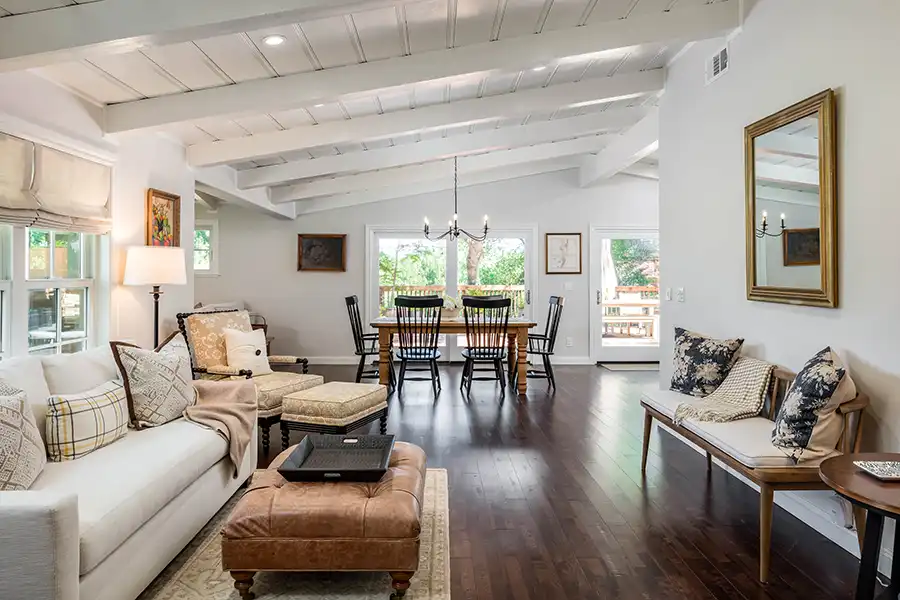
A net-zero remodel in Concord is defined not by a single appliance, material, or solar array but by how effectively the entire remodeled home reduces energy demand, operates efficiently, incorporates renewable energy, and manages consumption as an integrated system. The process typically begins with the building envelope through improvements to insulation, air sealing, windows, doors, roofing, and passive design, followed by efficient HVAC, heat-pump water heating, induction cooking, efficient appliances, LED lighting, and other appropriate electrification measures.
Solar photovoltaic panels can then provide renewable electricity to offset remaining energy consumption, while battery storage and smart energy-management systems can add flexibility, monitoring, and resilience. For luxury homeowners, sustainability does not have to compromise architectural character or premium finishes, as a high-performance remodel can incorporate custom cabinetry, natural stone, expansive windows, sophisticated lighting, smart-home technology, spa-inspired bathrooms, and elegant indoor-outdoor spaces while simultaneously improving energy performance. The strongest results come when these elements are considered early and coordinated through a comprehensive remodeling plan.
Frequently Asked Questions
1. Does Installing Solar Panels Make A Remodel Net Zero?
No, because solar panels address renewable electricity generation but do not automatically reduce the home’s underlying energy demand, which is why a net-zero strategy also considers insulation, air sealing, efficient HVAC, high-performance windows, efficient appliances, and other measures before sizing renewable generation to offset annual consumption.
2. Can An Older Concord Home Be Remodeled Toward Net-Zero Performance?
Yes, although the appropriate approach depends on the home’s age, construction, electrical infrastructure, roof, windows, HVAC system, insulation, and remodeling scope, with older properties often requiring additional planning to address existing conditions before major envelope or electrification improvements are installed.
3. Does A Net-Zero Remodel Require Making The Entire Home Electric?
Not necessarily, although electrification is a common component of modern high-performance remodeling strategies, allowing homeowners to evaluate technologies such as heat-pump HVAC, heat-pump water heating, induction cooking, and electric laundry equipment according to the home’s existing infrastructure, goals, budget, and applicable requirements.
4. Is A Net-Zero Remodel More Expensive Than A Conventional Remodel?
A net-zero-oriented remodel can have higher upfront costs when it includes advanced efficiency measures, renewable-energy systems, electrical upgrades, or premium equipment, but the actual difference depends on the project’s scope, and coordinating these improvements during a major renovation can be more practical and cost-effective than retrofitting them later.
5. What Is The First Step Toward A Net-Zero Remodel In Concord?
The best starting point is an evaluation of the existing home rather than immediately selecting products, because an energy and building assessment can identify weaknesses in the envelope, HVAC system, insulation, windows, electrical infrastructure, appliances, and other systems before the remodeling team develops an integrated plan for efficiency, comfort, electrification, renewable energy, and design.
Put These Room-By-Room Remodeling Tips To Work With Carey Bros. Design & Build Remodeling
Every room in your home has the potential to be more functional, more comfortable, and more enjoyable. Whether you’re thinking about updating your kitchen, refreshing a bathroom, creating a better home office, or improving your living spaces, the right plan can help you make the most of every remodeling dollar. Taking a room-by-room approach allows you to prioritize your goals, minimize disruption, and steadily transform your home into a space that better fits your lifestyle.
Carey Bros. Design & Build Remodeling works with homeowners throughout Contra Costa County, including Walnut Creek, Danville, Lafayette, Orinda, Concord, San Ramon, Moraga, Pleasant Hill, Martinez, and Alamo, to create remodeling plans that are practical, organized, and tailored to each family’s needs. Our team helps you identify which projects will have the greatest impact and develops a strategy that aligns with your vision, timeline, and budget.
If you’re looking for room-by-room remodeling tips and expert guidance for your next project, now is the perfect time to start the conversation. Contact Carey Bros. Design & Build Remodeling today to schedule a consultation and discover how thoughtful planning can help you create a home you’ll love for years to come.
Disclaimer
The materials available on this website are for informational and educational purposes only and are not intended to provide legal, financial, or professional construction advice. You should consult with a qualified general contractor, architect, or other relevant professionals before making decisions regarding remodeling, construction, or home improvement projects. Do not act or refrain from acting based on any content included on this site without seeking appropriate professional guidance. The information presented on this website may not reflect the most current building codes, regulations, or industry standards. No action should be taken in reliance on the information provided on this website. We disclaim all liability for actions taken or not taken based on any or all of the contents of this site to the fullest extent permitted by law.