
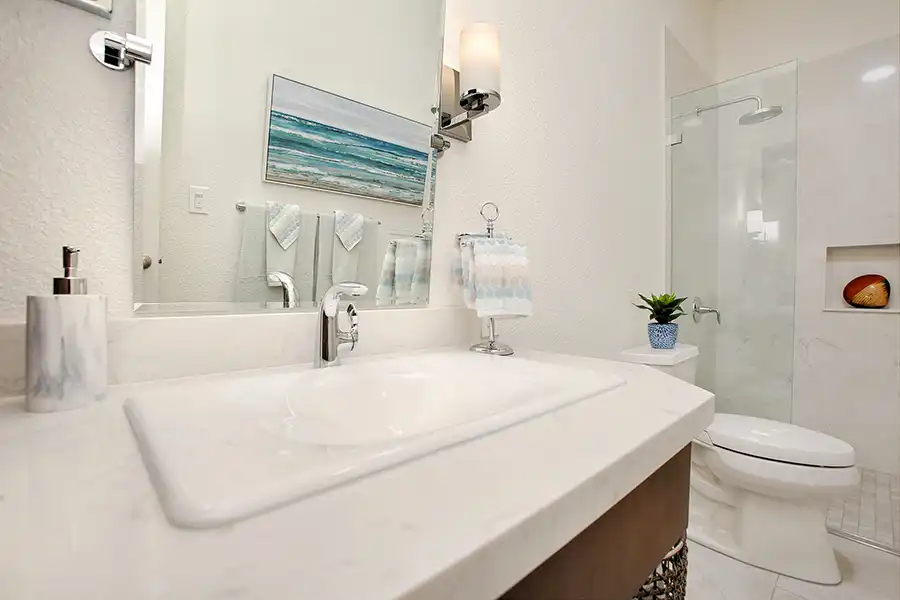
In a high-moisture bathroom environment, these materials hold up best: porcelain tile, glass, stainless steel, and solid surface composites. These resist water, prevent mold, and require less maintenance than wood or regular drywall. Porcelain tile resists water and almost never discolors. Glass is spot-resistant and doesn’t deteriorate from steam. Stainless steel hardware eschews rust and maintains a clean appearance long after others have corroded. Solid surface composites, such as engineered stone, don’t absorb water and resist mold much better than natural stone. As for wall boards, cement board works best since it doesn’t disintegrate after extended water exposure. Understanding which materials stand up best to a moisture-rich bathroom environment guides your finish selections and saves time and money. The following section provides actual examples and maintenance advice.
Key Takeaways
- Choosing materials that are highly moisture resistant, like porcelain tile, quartz, acrylic, and tempered glass, will go a long way to ensuring your bathroom stands the test of time while requiring minimal upkeep.
- Good ventilation through well-positioned exhaust fans and dehumidifiers is essential for managing humidity and avoiding mold. This protects both your building and indoor air quality.
- Right installation techniques paired with good sealants and ongoing maintenance can go a long way in preventing water intrusion and prolonging the life of bathroom fixtures and finishes.
- Sustainable options like recycled content surfaces and responsibly sourced wood alternatives provide eco-friendliness while still delivering essential moisture resistance for bathrooms.
- Routine inspections and early detection of problems, such as warping, grout degradation, or peeling finishes, prevent costly repairs and a bathroom that’s both healthy and functional.
- Whether you’re a homeowner or a facility manager, you’ll save more over the long haul and be happier in your surroundings by spending a little extra on materials that hold up in a moisture-rich bathroom environment.

Why Moisture Matters
Wetness is a given in bathrooms, courtesy of showers and baths. With high humidity levels, bathrooms are known for their moisture environments that make cabinet materials susceptible to rot, mold, and structural defects. Understanding moisture behavior in these humid conditions is crucial for choosing quality bathroom cabinets that ensure longevity and well-being.
The Humidity Problem
Bathrooms commonly exceed 60% relative humidity, particularly following hot showers or baths. This moisture level is dangerous to items such as wood cabinets, painted surfaces, and certain metals. Paint can peel, and cabinets can warp, especially if inappropriate cabinet materials are used. Water-resistant surfaces like ceramic tile or sealed stone fare better in these brutal conditions.
Showers, baths, and even wringing out wet towels introduce perpetual moisture. Bad ventilation and cramped spaces can hold in moist air, creating condensation on walls and ceilings. In bathrooms lacking good airflow, seasonal changes like rainy weather or cold spells can exacerbate the issue, with humidity peaking and persisting even more, affecting the cabinet life and leading to mold growth.
The construction of a bath itself can be an asset or a liability in moisture management. Features like slope and drainage in shower floors prevent water from pooling. Well-sealed joints and quality cabinet materials with unmatched moisture resistance prevent water from entering walls and floors, so moisture can’t lurk and cause further damage.
Long-Term Damage
Long-term exposure to elevated moisture can deteriorate most commonly used building materials. Wood can swell, metal can corrode, and drywall can crumble. This eventually results in costly repairs or the necessity to replace cabinets, flooring, or even supports.
Other times moisture lurks behind walls or beneath floors, revealing itself as nothing more than discoloration, mildew odors, or bowing. These lurking issues become out of sight and out of mind, making them more difficult and expensive to fix. Choosing water-resistant fabrics and applying protective finishes prevents damage and extends your efforts and budget.
Health Implications
Mold and mildew love damp areas. Their spores can degrade indoor air quality, inducing coughing, allergies, or worse for immunocompromised individuals. Clues of bad air are weird odors, steamy mirrors that never go away, or excessive colds and coughs among occupants.
Ventilation is very important. Here’s a table to show the effectiveness of different types:
| Ventilation Type | Effectiveness | Best For |
| Window Ventilation | Moderate | Small bathrooms |
| Exhaust Fan | High | Most environments |
| Dehumidifier | Very High | Humid climates |
Incorporating non-toxic materials, like low-VOC paints or mold-resistant grout, goes a long way towards keeping the space safe, particularly for kids, elders, and those with allergies. Good tidiness and routine inspections keep moisture from accumulating and arrest mold at the source.
Best Materials For Bathrooms
Bathrooms contend with high humidity and heavy traffic, making moisture-resistant bathroom cabinets essential. Only specific cabinet materials flourish in these harsh environments. Durability, water resistance, and low maintenance are what count. With the proper selections, you’ll keep mold, swelling, or stains at bay. Many materials these days combine style and utility, offering quality cabinet materials that imitate luxury finishes yet remain pragmatic.
- Porcelain and ceramic tile
- Glass tiles
- Luxury vinyl planks
- Natural stone (sealed)
- Quartz and solid surface countertops
- Tempered glass
- Acrylic and fiberglass panels
- Stainless steel fixtures
- Laminate or thermofoil cabinetry
1. Bathroom Floor Surfaces
LVP reigns supreme for bathroom flooring. They’re fully waterproof, dent-resistant and look like wood or stone. Porcelain and ceramic tiles offer timeless durability and resist water and scratches effectively. Laminate flooring is less suitable in wet areas, as it tends to swell even if deemed “water-resistant.
Slip resistance is important for safety, particularly around wet areas. Porcelain tiles that are rated for floors usually are textured. They are easy to clean with LVP or tile, but grout lines may require sealant to prevent staining.
2. Bathroom Wall Surfaces
Waterproof wall panels assist in preventing moisture infiltration, especially in humid bathrooms. Fiberglass and acrylic wall liners fare best in showers where the water hits most, offering unmatched moisture resistance. They require low maintenance and stand the test of time. Glass tiles provide a contemporary aesthetic and wipe down with ease, but come at a premium compared to ceramic or acrylic options. Tiles on bathroom walls look fantastic and protect as long as you seal all grout joints, ensuring they withstand specific bathroom conditions.
3. Vanity Storage Units
Vanities experience daily water exposure, making the choice of quality cabinet materials essential. Materials like marine-grade plywood, HPL, or thermofoil cabinets hold up well in humid environments. Laminates won’t get stained or warped, while thermofoil, a vinyl film on MDF, provides a smooth, water-tight finish. Built-to-order vanities can cozily squeeze into awkward spaces, enhancing bathroom storage solutions.
4. Sink Countertops
Quartz is a star for counters, especially in contemporary bathroom designs. It is non-porous and offers excellent moisture resistance, effectively resisting spills, stains, and scratches. Solid surface counters perform similarly. A few sealed natural stones are fair if resealed regularly, while sealed wood adds warmth but requires specific maintenance and a waterproof material finish to endure in humid environments.
5. Modern Shower Designs
Tempered glass enclosures look sleek and contain water, making them a great choice for bathroom designs. Acrylic and fiberglass shower walls wash up quickly and hold their shine, while proper waterproofing under tiles or bathroom flooring materials prevents moisture penetration, ensuring durability in wet environments.
Beyond The Obvious Choices
Bathrooms require durable materials that perform well in humidity environments. MGO panels excel in wet areas, preventing water intrusion and effectively fighting mold better than many alternatives. Unlike certain wood panels, they don’t warp or break down. For quality bathroom cabinets, newer laminates have made significant strides, mimicking wood, stone, or textured walls while being cheaper and more durable in steamy environments. Stone tiles can transform bathrooms into stunning spaces, but they require sealing and attention to prevent water absorption and staining. Cement boards serve as an excellent backing for tile or walls, though they are heavy and need special tools for proper fitting.
Many opt for plywood cabinets, which can endure the test of time if sealed correctly, developing a beautiful patina. Without proper sealing, they risk blistering or decaying in a humid atmosphere. Regular drywall and MR gypsum boards are not suitable for wet areas and may need replacement every few years. Choosing hard-wearing panels or boards, such as thermofoil cabinets, is an economical decision that pays off over time, ensuring long-lasting performance under specific bathroom conditions.
Ventilation’s Role
Adequate ventilation is critical to drying out bathroom surfaces, especially in humid environments. A great ventilation system keeps steam from building up, while dehumidifiers assist by extracting additional moisture and reducing mold growth and cabinet swelling.
- Put in a really good exhaust fan. Be certain it vents outside.
- Run the fan during and after showers.
- Use a dehumidifier if moisture lingers.
- Check fan filters and clean them often.
- Leave doors or windows cracked for fresh air.
The Right Sealants
Sealants prevent water from entering surfaces, making them essential for maintaining quality bathroom cabinets. Silicone sealants are best for tiles and glass, while polyurethane can assist with wood and stone in humid bathrooms. Reseal every year to help keep practical moisture barriers strong.
Proper Installation
Bad fits or gaps in bathroom cabinetry let in water and ruin things. Follow maker tips for each cabinet material. Artisan craftsmen understand how to lay heavy panels, stone, or tile so that they remain snug in humid bathrooms. If you skip steps, it leaks or rots later. Installation done right means fewer repairs and a longer life for your bathroom.
Common Material Failures
It’s amazing how moisture-laden bathrooms really put quality cabinet materials to the test. Constant moisture, steam, and splashes accelerate decay, making the choice of moisture-resistant bathroom cabinets and proper upkeep essential. Most failures boil down to subpar moisture handling, faulty installation, or absence of periodic inspections. Eventually, even water-resistant materials can give way if neglected or not inspected routinely. Identifying red flags early, such as billowing, fading, or checking, stops minor problems from becoming major, costly damage. Routine inspections and employing antifungal or treated core materials are essential to durable performance.
Wood Warping
Wood, while warm, suffers in wet environments, especially in humid bathrooms. Too much moisture can cause the wood to swell, warp, and deform, particularly if ventilation is lacking. Ordinary plywood and solid hardwoods like teak or cedar withstand moisture longer than softer woods like pine, making them ideal for quality bathroom cabinets. These denser species are favored for bath vanities and trim, as they resist water absorption and inhibit mold growth. Even premium varieties require strong sealing, particularly of edges, which soak up moisture quickest. Reapplying finishes and looking for cracked sealant prevents water intrusion and hidden rot. Engineered wood products, such as marine-grade plywood or high-pressure laminates, imitate solid wood’s appearance with less likelihood of warping and are certainly worth considering for steamy bathrooms.
Grout Degradation
Bathroom grout serves as your first line of defense against moisture penetration between tiles and the subfloor. In humid environments, moisture can infiltrate, compromising joints and leading to cracks, which may result in mold growth or tile shifting. DuPont recommends using epoxy or polymer-modified grout in wet zones, as standard cement-based grout erodes too quickly. This premium-grade, water-resistant grout provides unmatched moisture resistance and firmly anchors your tiles. Regular maintenance, including washing with mild cleaners and resealing joints annually, is essential for keeping water out. Additionally, grout sealers create a practical moisture barrier that extends the life of the grout and prevents mold. Remember to edge seal corners and transitions, as these areas are common points of grout failure.
Peeling Finishes
| Finish Type | Common Causes | Solutions |
| Latex Paint | Poor prep, excess humidity | Use moisture-resistant paint, prep surface well |
| Varnish | Inadequate sealing, steam | Apply multiple coats, seal edges |
| Laminate Coating | Water infiltration at seams | Use waterproof adhesives, seal seams |
Peeling finishes are common in bathrooms with typical paints or coatings due to high humidity levels. Moisture lifts weak finishes, leaving substrates vulnerable to water damage. Opting for hardy, moisture-resistant acrylics or specialty bathroom paints keeps this at bay. Proper preparation, including cleaning, sanding, and priming, is crucial for quality cabinet materials. Water will seep through tiny fissures if surfaces are not slick and sealed, so prepping correctly is important for durable outcomes.
My Personal Recommendations
Bathrooms confront steam, splashes, and humidity on a daily basis, making the selection of quality cabinet materials that offer excellent moisture resistance essential. My recommendations focus on achieving balance: functionality, style, and value, whether you’re remodeling on a budget, investing in premium cabinet materials, or aiming for eco-friendly designs.
- For budget-minded users, choose ceramic or porcelain tiles, acrylic panels, and laminate cabinetry.
- For long-lasting performance, consider quartz countertops, natural stone, stainless steel fixtures, and custom cabinetry.
- For eco-conscious homes: reclaimed wood, recycled glass, water-saving fixtures, and low-VOC finishes.
- All-purpose favorites are stainless steel, glass tiles, and quartz. These go with lots of design styles and weather demands.
- When choosing fabrics, you should consider the trade-off between aesthetics and practicality. For long-term satisfaction, quality counts.
The Budget-Friendly Build
- Porcelain and ceramic tiles are extremely water resistant, low-maintenance, and inexpensive. Acrylic wall panels are a budget friendly choice, providing a lustrous veneer that is resistant to soap scum and mildew.
- Laminate cabinetry replicates wood or stone for less.
- Vinyl flooring is affordable, water resistant, and easy to install for the DIYer.
- Look at IKEA and Kohler as brands for dependable and inexpensive bathroom goods.
DIY routes can make your dollars go a little further. Hang peel and stick tiles or acrylic shower panels that require basic tools. A quick way to make an impact is to paint old bathroom cabinets or add stick-on backsplash tiles. These are super easy and cheap. Prioritize moisture-exposed areas, such as bathroom flooring, shower-adjacent walls, and sink surroundings, where excellent moisture resistance is a must.
The Forever Bathroom
Saving money in the back end on replacements. Quartz countertops require minimal maintenance and don’t stain or require resealing, while natural stone, such as granite or marble, provides a distinctive, luxurious aesthetic. Stainless steel fixtures resist corrosion and fit any design. Glass tiles are chic and super easy to clean, but they are more expensive.
With custom cabinetry, you can utilize every inch of space and select finishes that stand the test of time. Timeless picks, such as neutral tile, classic fixtures, and clean lines, keep your bath looking good as fads come and go. Seek out materials rated for high humidity. They pay for themselves in repair and replacement savings over time.
The Eco-Conscious Choice
Bamboo, reclaimed wood and recycled glass tiles all of which slash waste and look seriously chic. Incorporating reclaimed wood for shelving or recycled glass as accent tiles adds personality while reducing footprint.
Low-VOC paints and water-based finishes shield against moisture without damaging indoor air. Water-conserving taps and dual-flush toilets reduce consumption. Even little swaps, such as LED lighting or efficient exhaust fans, increase sustainability and comfort.
Balancing Cost And Durability
Selecting bathroom finishes that endure extreme humidity environments is essentially an exercise in balancing expense with durability. Most people first consider cost, but it is actually about how frequently you need to repair or replace those materials. Plywood is a typical choice for bathroom cabinets. It is cheaper than solid wood, ranging from $100 to $300 per linear foot, and even from $200 to $500 for premium builds. This option serves as a nice compromise for those who want a solid base but do not want to pay a lot for solid wood. Laminate cabinets have come a long way, with finishes now looking and feeling close to real wood or stone. These thermofoil cabinets provide a great balance of price and durability, rendering them suitable for most high traffic bathrooms across the globe.
Investing in top-quality cabinet materials can help you save more over time. Bathrooms are high-traffic and drenched with water, so surfaces need to be impervious to moisture, scratches, and stains. If you purchase cheaper cabinets or surfaces, you can pay more down the road in repairs or premature replacements. High-quality materials such as new-age laminates or moisture-sealed plywood require less maintenance and have a much longer lifespan, which means you’re saving time and money. Initial cost is not merely price, but what you avoid having to spend down the road.
If you’re considering a bathroom remodel, it pays to frame it in smart financing. Some might dip into savings, while others might consider home improvement loans or green loans designed for eco-friendly renovations. With a little strategic spacing of expenses, you can afford more durable, higher quality bathroom cabinetry and still keep on budget. This decision can allow you to select sustainable options, which can increase worth and reduce waste in the long run.
Doing your homework on cabinet materials pays off. It’s important to consider not only the initial cost but how well each material wears down, the amount of care it requires, and whether it fits your lifestyle. Do your research, talk to the pros, and weigh all your options. Great ventilation, daily maintenance, and proper hygiene can make even inexpensive materials last a little longer. When you pair your requirements, habits, and budget with intelligent material selections, you maximize your bang for the buck.
Final Remarks
To make the right selection for a wet bathroom, look for materials that are durable and do not absorb water. Tile, glass, and some plastics are best. Solid wood swells and cracks, so avoid it if you want fewer issues. Metal handles require a quality finish or rust sets in quickly. Vinyl floors, for example, feel soft and withstand steam and splashes for years. Stone looks sharp but requires a seal so stains do not stick. To keep things simple, just see how damp spots and steam alter the appearance and shape of your selections. Test out samples at home if you can. For more tips or if you want assistance selecting, get in touch with Carey Bros. Remodeling. Let’s get your bathroom primed for the years ahead.
Frequently Asked Questions
1. Which Flooring Materials Are Best For High-Moisture Bathrooms?
Porcelain tiles and natural stone tiles are fantastic bathroom flooring materials. They provide excellent moisture resistance and durability, protecting against humidity environments for years to come.
2. Can I Use Wood In A High-Moisture Bathroom?
Solid wood cabinets are a no-no in humid environments. Instead, consider sealed engineered wood or water-resistant laminate for better performance, though tile or stone remains superior in moisture resistance.
3. How Can I Prevent Mold In My Bathroom Materials?
Opt for non-porous materials like glass, porcelain, or sealed stone to enhance bathroom designs. Good ventilation and frequent cleaning minimize mold growth.
4. Are There Affordable Yet Durable Options For Bathroom Surfaces?
Ceramic tiles and vinyl flooring are inexpensive and durable bathroom flooring materials that stand up to water and are easy to replace.
5. Why Do Some Materials Fail In High-Moisture Bathrooms?
Materials such as untreated wood and standard drywall absorb moisture, leading to mold growth and premature deterioration in humid bathrooms.
The Power Of A Smooth Bathroom Remodeling Process With Carey Bros. Design & Build Remodeling, Your Contra Costa General Contractor
A great bathroom remodel starts with a clear, connected process that keeps every step moving forward. Many homeowners choose a design-build team because it removes the stress of managing separate designers, contractors, and vendors. Instead, one experienced group handles the entire project from the first conversation through the final walkthrough.
Carey Bros. Design & Build Remodeling brings all of this together under one roof. Your remodel begins with a collaborative design phase where we map out your goals, style preferences, and budget. Once the design is approved, our construction team steps in to bring your new bathroom to life. You stay informed the whole way because your designers and builders work as one team, which keeps the timeline steady and reduces surprises.
This streamlined approach gives you faster progress, tighter cost control, and a more enjoyable experience. Whether you want a modern update, better functionality, or a complete transformation, Carey Bros. Design & Build Remodeling creates bathrooms built for comfort, quality, and long-term value.
If you want a bathroom remodel that feels organized and stress-free, connect with Carey Bros. Design & Build Remodeling and see how the design-build process can make your project smoother from start to finish.
Disclaimer
The materials available on this website are for informational and educational purposes only and are not intended to provide legal, financial, or professional construction advice. You should consult with a qualified general contractor, architect, or other relevant professionals before making decisions regarding remodeling, construction, or home improvement projects. Do not act or refrain from acting based on any content included on this site without seeking appropriate professional guidance. The information presented on this website may not reflect the most current building codes, regulations, or industry standards. No action should be taken in reliance on the information provided on this website. We disclaim all liability for actions taken or not taken based on any or all of the contents of this site to the fullest extent permitted by law.