
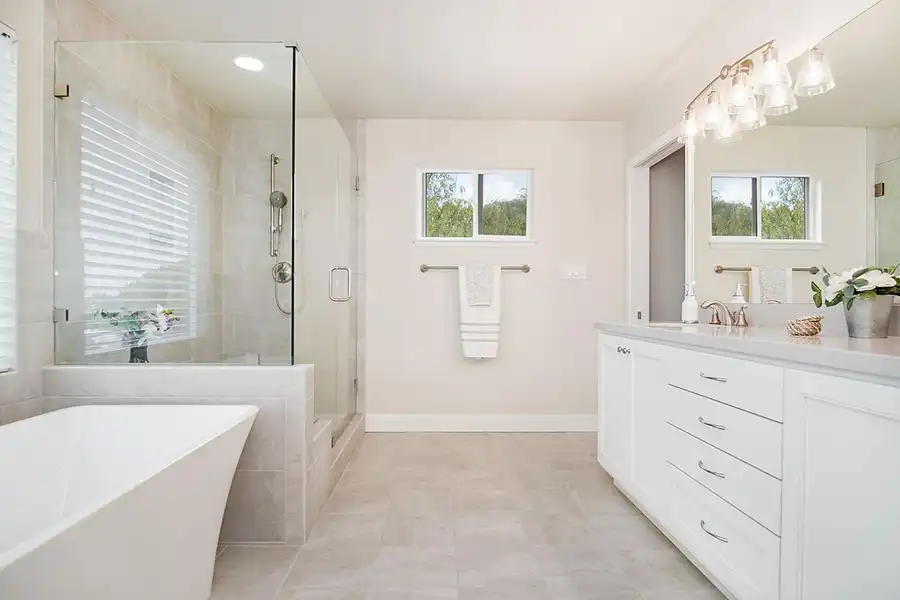
At Carey Bros. Remodeling, we understand that the best bathroom layouts for aging homeowners and those navigating limited mobility should prioritize open floor plans, barrier-free showers, wide doorways, and supportive safety features that preserve independence. Raised toilets, slip-proof floors, and lower sinks create a safer experience for those using walkers or wheelchairs. Strategic lighting and accessible storage reduce fall risk, making everyday routines more comfortable and manageable.
Wet rooms, designed as full waterproof spaces, offer additional room and keep surfaces dry and secure. These layouts support long-term usability, streamline daily tasks, and maintain comfort as needs evolve. The rest of this post explores functional design tips and product recommendations to help make bathrooms safer, more accessible, and more enjoyable for all.
Key Takeaways
- Choosing the right bathroom layout is key to making your space accessible, comfortable, and safe for aging homeowners and those with limited mobility, with open-concept, three-quarter, wet room, split, and galley layouts all having their own benefits.
- Focusing on accessible elements like grab bars, non-slip floors, wide doors, and ample lighting minimizes falls and maximizes usability.
- Incorporating smart technologies such as automated controls, health monitoring devices, and emergency alert systems facilitates independent living while ensuring prompt aid if necessary.
- Design decisions that support independence, reduce stress, and encourage dignity help users feel psychologically well, making the bathroom a supportive space.
- Designing a remodel means sitting down with a clear picture of what your users need, a realistic budget, and realistic phases of construction. Seek the input of family members and/or caretakers.
- Future-proofing goes beyond convenience. It includes structural reinforcement, adaptable plumbing, and convertible fixtures so your bathroom stays up to date as your needs change.
What Are The Best Bathroom Layouts?
Choosing the perfect bathroom design for senior homeowners with mobility challenges involves a balance of comfort, safety, and style, particularly with accessible bathroom floor options that enhance maneuverability and provide a safe bathing experience.
| Layout | Features | Pros | Cons |
| Open-Concept | No barriers, wide open space | Easy maneuvering, lots of light, flexible | Less privacy |
| Three-Quarter | Toilet, shower, sink, no tub | Saves space, functional, privacy options | Limited bathing options |
| Wet Room | Curbless shower, full waterproofing | Seamless access, easy cleaning | Can feel less private |
| Split Layout | Divided zones for toilet and bathing | More privacy, easier for multiple users | Needs more space |
| Galley | Fixtures on two opposite walls | Efficient, compact, good for small spaces | Can feel narrow |
1. The Open-Concept Layout
Open-concept bathroom design upgrades eliminate nearly all partitions, providing ample unimpeded space. This arrangement is perfect for wheelchair users and enables a full 360-degree turn in front of the toilet and vanity. To enhance bathroom safety, grab bars with a diameter of 1 ¼ to 1 ½ inches should be installed and must support up to 300 pounds. Slip-resistant floors and entryways at least 32 inches wide, ideally 36 inches wide, are recommended on a flat threshold. Natural light, whether from windows or skylights, enhances both visibility and mood. The open space creates less chance of banging into items, making it the ideal design for anyone hoping to age in place.
2. The Three-Quarter Layout
The three-quarter bath features a toilet, shower, and sink, but no tub. To create an accessible bathroom floor, arrange fixtures nearby for convenience and leave a 21 to 30 inch free zone in front of the toilet and shower. A 17 to 19 inch toilet height is suitable for seniors, making it ideal for senior bathroom remodels. Sliding doors save valuable floor space and allow users to enter and exit unimpeded. Non-slip tiles and good lighting are a must for bathroom safety.
3. The Wet Room Layout
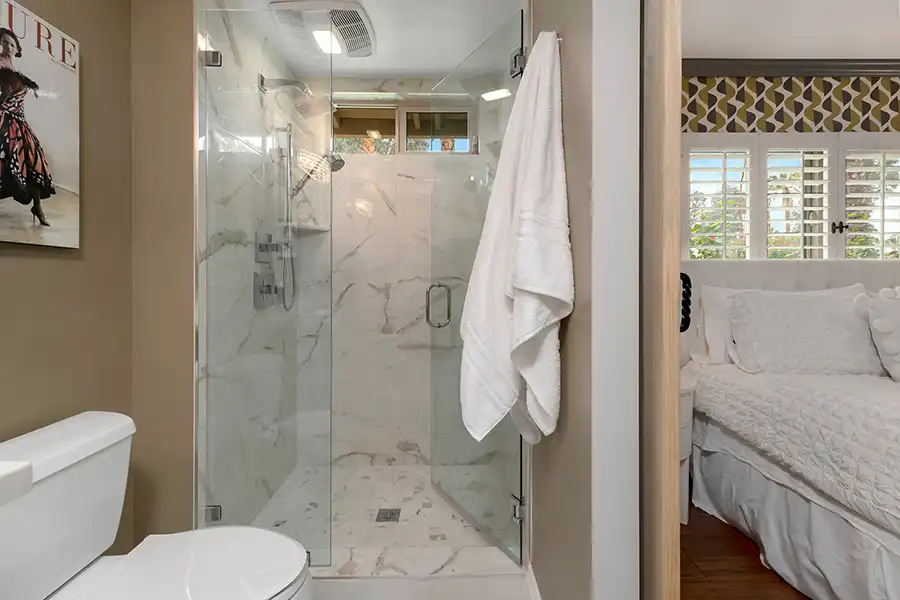
A wet room features an accessible shower area without a raised shower tray or curb, enabling users to walk or roll in effortlessly. Utilizing waterproof materials on walls and the accessible bathroom floor minimizes the risk of slipping. Incorporating a shower seat and handheld shower enhances comfort, while effective drainage with a slight slope ensures that water is diverted away from walkways.
4. The Split Bathroom Layout
Split bathrooms separate the toilet and bathing spaces, ensuring privacy and enhancing bathroom safety. Wide doorways and flat entries are essential for accessible bathroom design. Low and open storage accommodates maneuverability, while contrasting colors for the shower area and toilet enhance visibility for those with low vision. Additionally, grab bars and slip-resistant flooring options minimize the risk of falls, making it a functional bathroom.
5. The Galley Layout
A galley bathroom design places fixtures on opposing walls, conserving valuable floor space while permitting easy traffic if the corridor is sufficiently wide. To enhance bathroom safety, use wall-mounted storage to keep counters clear. Seamless flooring options mitigate tripping hazards, promoting a safe bathing experience and extending the room visually.
Essential Safety Features
Regardless of how beautiful it is, the best bathroom design upgrades for aging homeowners and the mobility challenges must include accessible bathroom features that ensure safety, comfort, and independence. These life-saving enhancements minimize danger and allow users to enjoy a safe bathing experience.
- Slip-resistant flooring to lower fall risk
- Zero-entry showers for smooth access without steps
- Grab bars for steady support at showers and toilets
- Elevated toilet seats for safe, easy transfers
- Proper ventilation to prevent moisture and mold
- Heated flooring for comfort and safety
- Motion-sensor and ambient lighting for better visibility
- Accessible and organized storage solutions
The Flooring
Slip-resistant materials such as textured porcelain tiles, vinyl, or rubber mats are essential for creating an accessible bathroom floor that prevents slips and falls when wet, which is a necessity for aging users. Gleaming porcelain tiles over 30 cm wide guarantee fewer grouted lines, making cleaning a snap and minimizing the risk of standing water. Textured or matte finishes provide more traction than glossy surfaces. To increase longevity and sanitation, floors like sealed vinyl or stone prevent water damage and restrict mold. Heated floors can assist too, particularly in chillier regions, as they maintain dry, warm surfaces and decrease the probability of slips.
The Lighting
Bright, uniform lighting is crucial in accessible bathroom design to prevent shadows and glare that can lead to confusion or tripping. Ambient lighting must illuminate the entire room, while task lighting over sinks and mirrors enhances visibility for daily grooming. Motion-sensor lights are especially useful for those with mobility issues, as they switch on automatically, which is ideal for navigating at night in a friendly bathroom. Fixtures must be oriented at angles that reduce glare and avoid the creation of dark corners, fostering both safety and comfort.
The Fixtures
Ergonomic fixtures, including lever handles and touchless faucets, enhance usability with minimal hand strength, making them ideal for accessible bathroom renovations. ADA-compliant features like raised toilet seats and grab bars promote bathroom safety and autonomy. Additionally, installing bidets in senior bathrooms can reduce movement and decrease fall risk, ensuring a safe bathing experience while assisting with personal hygiene.
The Storage
Convenient storage in an accessible bathroom design keeps clutter off of pathways and brings toiletries to arm’s length. Pull-out drawers and open shelving are great for quick access, even for the mobility impaired. Lower cabinets accommodate wheelchair users while maximizing valuable floor space, balancing storage with wide, open aisles for safe maneuverability.
Integrating Smart Technology
Smart technology in bathroom design allows those with limited mobility or elderly to live with greater comfort and security. When used wisely, these tools not only streamline routines but promote social engagement and independence. Smart tech is now a core part of universal design, making bathrooms work for everyone, no matter their age or needs.
Smart Technology Options for Bathroom Integration:
- Voice-activated assistants for hands-free help and communication
- Motion-sensor nightlights and toe-kick lighting let you make it through the middle of the night without stumbling.
- Video communication systems for check-ins with family or caregivers.
- Such as smart thermostats that maintain a consistent, safe temperature in the bathroom.
- Automated shower controls for personalized settings
- Wearable emergency alert devices that detect falls
- Smart scales and blood pressure monitors for health tracking
- Medication and hydration reminders set by mobile devices
Automated Controls
Smart thermostats maintain a consistent bathroom temperature, which is essential for those who are cold-sensitive or struggle with temperature fluctuations. Voice-activated lights and fixtures ensure that someone can activate lights or showers without having to move around or use their hands, significantly simplifying the process for those with joint pain or mobility challenges. Additionally, integrating smart shower systems into your bathroom design upgrades allows you to pre-set the water temperature and flow, enhancing convenience while reducing the need for manual adjustments. Many of these systems work seamlessly with existing home automation platforms, ensuring a cohesive smart home experience.
Motion-sensor lighting, like toe-kick lights, illuminates the bathroom floor at night, helping to avoid trips and falls. These smart home features can activate lights as soon as someone rises, eliminating the need to grope for a switch in the shadows. Such choices are vital for enhancing bathroom safety, as eighty percent of home falls occur in the bathroom, making fall prevention a priority in any accessible bathroom renovation.
Health Monitoring
Health monitoring is yet another area where smart tech significantly impacts our lives, particularly in the context of accessible bathroom renovations. From smart scales to blood pressure monitors, these devices collect health metrics daily, which is especially beneficial for individuals managing chronic conditions. Configurable medication or water reminders via a phone or speaker can assist senior citizens in maintaining their habits, ensuring that these smart devices are easily accessible and within reach for a safe bathing experience.
Routine tracking and reminders enable patients to detect changes in their health early, keeping them in control. This data can be shared with family or healthcare providers if desired. Additionally, video calling systems provide access to health check-ins and social contacts, which can help reduce isolation, especially for those living alone in friendly bathrooms that accommodate their needs.
Emergency Alerts
Emergency alert systems are a top priority in bathroom safety. They can alert family, caregivers, or even local emergency services immediately if there’s an issue. Smart Technology Integration: Wearable devices such as pendants or wristbands can identify falls and immediately send alerts, even if the individual is unable to access a phone. Bathrooms should be equipped with accessible emergency buttons and pull cords located adjacent to the shower, toilet, or bathtub.
There are clear, simple instructions next to each emergency feature so that anyone can use them in a crisis. Voice-activated devices are particularly useful, enabling one to summon assistance with a mere utterance. It combats bathroom falls, which are a prevalent danger, and provides comfort for both users and their families.
The Psychology Of Accessible Design
Accessible bathroom design is about more than just physical convenience, it significantly impacts the psyche of the user, influencing how secure, empowered, and valued they feel in their environment. For aging homeowners or individuals with restricted mobility, ideal bathroom modifications, such as curbless showers and friendly bathroom designs, nurture health, autonomy, and a feeling of community.
Fostering Independence
A bathroom that provides its users with room to maneuver can significantly enhance autonomy. Incorporating accessible bathroom design features such as wide doorways, open layouts, and an accessible bathroom floor with a minimum of 1.2 meters for turning allows those with walkers or wheelchairs to manage everyday activities with minimal assistance. Smart options like storage at reachable heights, lever-style faucets, and touchless controls contribute to a friendly bathroom atmosphere. Additionally, grab bars near toilets and showers enhance bathroom safety, translating into reduced dependence on others and increased self-confidence.
A good layout embraces all visitors and supports universal design practices. Features like adjustable handheld showerheads, non-slip flooring, and flat thresholds cater to all ages and needs, resulting in an environment where independence comes easily and naturally.
Reducing Anxiety
Comforting hues and plush fabric can make visitors feel at peace. The blues and greens, for instance, evoke peace, while matte finishes soothe eyes from glare. Natural light, when you’re lucky enough to have it, enhances mood and aids in time orientation. Elements such as wood or natural stone add warmth and anchor the space.
Open routes, a minimum of 90 centimeters, maintain the bathroom as easy to navigate. With no clutter and no sharp corners, stress falls. Easy, commonplace fixtures help users feel comfortable. Sound-absorbing panels, curtains, or even soft rugs reduce noise and calm the room.
Promoting Dignity
Privacy issues. Frosted glass, strategically positioned screens, and door locks give patients control over their own care. Adjustable mirrors and sinks at varying heights make grooming easy.
Design elements that align with personal preference, such as color, fixtures, or lighting, demonstrate respect for users’ preferences. Access features do not have to be clinically looking. Grab bars and seating can fit with the rest of the decor. This combination of practicality and beauty sparks pride in users’ rooms and in their rituals.
Planning Your Remodel
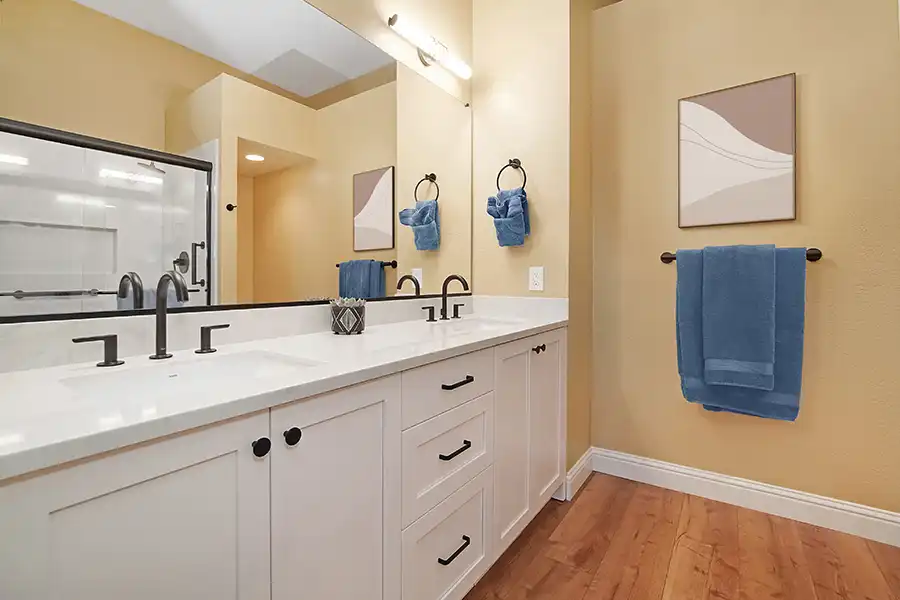
A great bathroom remodel for aging homeowners or those with mobility challenges begins with these steps. Planning ahead for accessible bathroom renovations can keep all of you safe, comfortable, and independent for years to come. Your approach should be about present and future needs, combining functional decisions, budget management, and collaboration among all users to create friendly bathrooms.
- Consider the needs and safety risks for all who will use the bathroom.
- Establish a reasonable budget for both essentials and upgrades.
- Break the work into phases for less disruption.
- Collaborate with relatives or caregivers to receive input and new concepts.
Assess Needs
- Discuss with every member of your house their daily habits and frustrations.
- List current problems: narrow doors, high tubs, slick floors, poor lighting.
- Anticipate future issues, like access for a wheelchair or fading balance.
- Inspect for dangers such as unstable mats, sharp corners, and inaccessible shelves.
- Make a list of modifications prioritized by necessity and effect.
Every family is different. Some may require grab bars and low sink heights immediately, while others may plan for future curbless showers or slip-resistant flooring options. Universal design practices are good for every age and ability, so wider doorways and reinforced walls are smart for all.
Set Budget
Begin with a complete budget that includes materials, labor, and hidden costs. Include funds for core safety features: grab bars, anti-slip tiles, and good lighting. Plan ventilation upgrades to stave off mold and moisture. Consider investments that bring long-term value, like wall-mounted sinks for easier cleaning or smart tech like touchless taps. Research grants or loans in your country for accessible bathroom renovations that enhance safety and comfort.
Phase Work
Phasing your remodel allows you to budget and maintain a functional bathroom. Start with safety-first solutions such as grab bars, secure rails, or curbless showers before choosing a tile motif or fresh paint. Tackle one space at a time, ensuring you aren’t left with a mosh pit of risk and clutter. Plan noisy or messy work for when the house is less hectic. Make sure you complete each tier before moving on to the next for safety and stability.
Future-Proofing The Space
Future-proofing your bathroom design, especially with accessible bathroom renovations, saves you expensive renovations when requirements evolve. A well-designed, thought-out space, such as a friendly bathroom with curbless showers, makes the home safe, manageable, and comfortable for aging homeowners or individuals with limited mobility.
| Strategy | Key Considerations | Example Applications |
| Reinforced Structure | Support for grab bars/seating, code compliance | Wall blocking, sturdy flooring |
| Adaptable Plumbing | Flexible piping, easy-access for upgrades | Removable panels, modular pipes |
| Convertible Fixtures | Adjustable and versatile, multi-functional | Fold-down seats, removable grab bars |
| Universal Design | Works for all, not just people with needs | Zero-threshold showers, wide doorways |
| Durable, Low-Maintenance Materials | Easy to clean, withstands frequent use | Ceramic, porcelain |
| Adjustable Storage | Customizable shelving, accessible for all users | Adjustable height shelves |
Structural Support
Walls with solid backing installed during construction or remodeling allow grab bars and fold-down seats to be installed at any point. Future-Proofing The Space Even if supports aren’t necessary now, adding plywood or blocking behind drywall, particularly around the toilet and shower, gives you flexibility down the road.
While building codes dictate some standards for accessibility, consulting an expert guarantees you’re up to code and identifies additional features that enhance safety, like slip-resistant flooring or firmly anchored chairs. Selecting hard-wearing materials, whether it be porcelain or ceramic, maintains ease of cleaning and resists the test of time. Wider doorways, no less than 91 centimeters, are mandatory for wheelchair access and open up a bathroom.
Adaptable Plumbing
With flexible plumbing, you can easily upgrade or swap out fixtures down the road, or simply maintain with minimal mess. Modular piping makes it so changes can be made without tearing into walls, saving time and costs. Panels offering immediate access to shut-off valves or drains are helpful for maintenance.
Water-efficient fixtures minimize utility expenses and bolster sustainability initiatives. Planning plumbing so that faucets, toilets, and showers can be raised, lowered, or replaced later helps the bathroom evolve as needs change.
Convertible Fixtures
Future-proof the space with adaptable fixtures. Think of sinks that drop to wheelchair height and toilets with swappable seats should mobility take a turn downwards. Fold-down shower seats and grab bars that can be added or removed future-proof the space.
Space-saving furnishings, such as benches with storage or easy-access shelving, fulfill multiple purposes without the mess. All controls and handles should be straightforward and easy to reach, so they are easy for an aging senior or a weaker user to operate.
Final Remarks
To choose the right bathroom layout for aging or limited mobility, prioritize simplicity, comfort, and universal accessibility. Wide pathways, walk-in showers, and grab bars play a major role in safety, while proper lighting and slip-resistant flooring help prevent accidents. Smart technology, from touch-free faucets to voice-controlled lighting, enhances ease of use and supports long-term independence. Every thoughtful detail, from a shower bench to a raised toilet, contributes to dignity and comfort at home. Begin with a simple sketch, plan for both current and future needs, and adapt as life changes. If you’d like more guidance or professional planning support, Carey Bros. Remodeling is here to help you design a bathroom that supports safe, confident living for years to come.
Frequently Asked Questions
1. What Is The Safest Bathroom Layout For Aging Homeowners?
A walk-in shower with a wide entry, non-slip flooring, and grab bars is essential for a safe bathing experience. Incorporating accessible bathroom floor designs allows for easy navigation with a wheelchair or walker, preventing falls.
2. How Can I Make A Bathroom Accessible For Limited Mobility?
Incorporate a friendly curbless shower, a raised toilet seat, and lever-style faucets into your accessible bathroom design. Widen doors to a minimum of 90 centimeters for wheelchair access, ensuring maneuverability and safety enhancements with strong handrails.
3. Are Smart Bathroom Features Useful For Older Adults?
Indeed, smart aspects such as motion-sensor lights and voice-activated controls enhance bathroom safety and ease, particularly in accessible bathroom renovations for individuals with restricted movement or sight.
4. What Colors Work Best For An Accessible Bathroom?
Utilize high-contrast colors to emphasize fixtures and edges. This aids those with vision issues to see and move safely.
5. What Should I Consider When Remodeling For Aging In Place?
Think ahead by selecting slip-resistant materials and durable flooring options, along with accessible storage and adjustable fixtures, while ensuring enough floor space for a wheelchair or walker.
The Power Of A Smooth Bathroom Remodeling Process With Carey Bros. Design & Build Remodeling, Your Contra Costa General Contractor
A great bathroom remodel starts with a clear, connected process that keeps every step moving forward. Many homeowners choose a design-build team because it removes the stress of managing separate designers, contractors, and vendors. Instead, one experienced group handles the entire project from the first conversation through the final walkthrough.
Carey Bros. Design & Build Remodeling brings all of this together under one roof. Your remodel begins with a collaborative design phase where we map out your goals, style preferences, and budget. Once the design is approved, our construction team steps in to bring your new bathroom to life. You stay informed the whole way because your designers and builders work as one team, which keeps the timeline steady and reduces surprises.
This streamlined approach gives you faster progress, tighter cost control, and a more enjoyable experience. Whether you want a modern update, better functionality, or a complete transformation, Carey Bros. Design & Build Remodeling creates bathrooms built for comfort, quality, and long-term value.
If you want a bathroom remodel that feels organized and stress-free, connect with Carey Bros. Design & Build Remodeling and see how the design-build process can make your project smoother from start to finish.
Disclaimer
The materials available on this website are for informational and educational purposes only and are not intended to provide legal, financial, or professional construction advice. You should consult with a qualified general contractor, architect, or other relevant professionals before making decisions regarding remodeling, construction, or home improvement projects. Do not act or refrain from acting based on any content included on this site without seeking appropriate professional guidance. The information presented on this website may not reflect the most current building codes, regulations, or industry standards. No action should be taken in reliance on the information provided on this website. We disclaim all liability for actions taken or not taken based on any or all of the contents of this site to the fullest extent permitted by law.