

If you’ve ever felt like your laundry room in your Concord home is more of a cramped afterthought than a functional workspace, you’re not alone. Many older homes across Concord and the wider Contra Costa County area were not designed with modern laundry needs in mind. What used to be a simple utility closet has now evolved into a high-functioning, multi-purpose space that handles washing, drying, storage, folding, stain treatment, and sometimes even pet care or mudroom duties.
When you remodel your laundry room, you’re not just improving aesthetics—you’re changing how efficiently your home runs every single week. The right upgrades can save you time, reduce physical strain, improve storage, and make daily chores feel significantly more manageable.
In Concord remodels, the focus is often on maximizing limited space, improving energy efficiency, and creating durable, low-maintenance designs that can handle frequent use. Whether your laundry room is tucked into a hallway closet or has its own dedicated space, thoughtful upgrades can completely transform it.
Key Takeaways
- Functional laundry rooms prioritize workflow, storage, and efficiency.
- Small upgrades can significantly improve usability in compact Concord homes.
- Modern remodels focus on energy efficiency, smart appliances, and durable materials.
- Layout optimization often matters more than square footage.
- A well-designed laundry room can double as a multi-purpose utility space.
Storage and Cabinetry Upgrades That Maximize Every Inch
One of the most impactful ways to improve your laundry room is by upgrading storage. In many Concord homes, laundry spaces are either underutilized or cluttered due to poor cabinet planning. Strategic cabinetry turns chaos into order.
Vertical Cabinet Systems for Tight Spaces
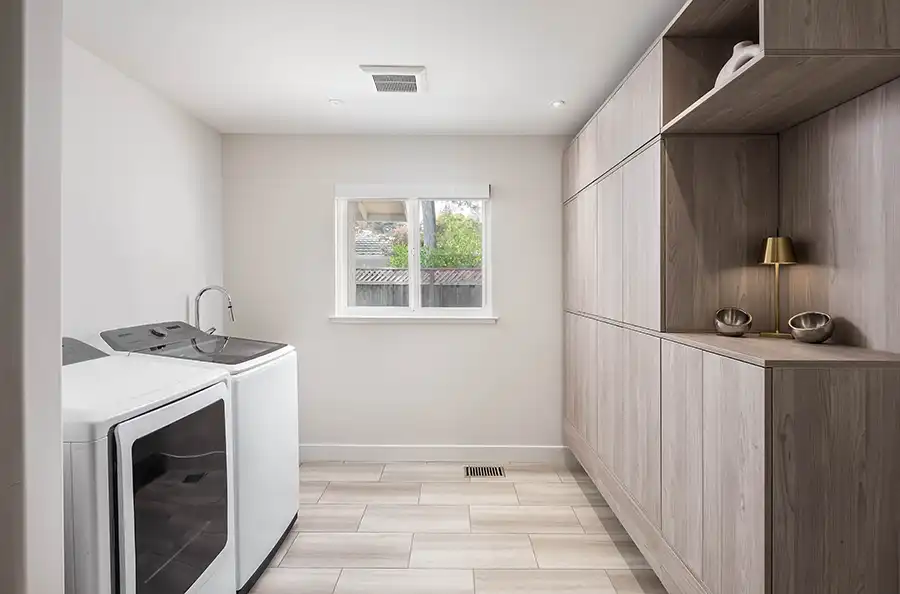
In smaller laundry rooms, vertical storage is a game-changer. Tall cabinets that extend to the ceiling allow you to use otherwise wasted space. You can store seasonal items, bulk detergent, cleaning supplies, and linens without cluttering your counters.
Wall-mounted cabinets also help free up floor space, making the room feel larger and easier to move through.
Built-In Sorting and Organization Zones
Instead of relying on standalone hampers, modern remodels often include built-in sorting systems. These can include pull-out bins labeled for whites, darks, and delicates. This makes laundry prep faster and keeps everything visually clean and contained.
You can also add dedicated compartments for ironing supplies, stain removers, and fabric care tools so everything has a designated home.
Countertops and Folding Stations
A dedicated folding surface is one of the most underrated upgrades in laundry design. Adding a countertop above front-loading machines creates a seamless folding zone. Materials like quartz, laminate, or butcher block offer durability while remaining easy to clean.
This single addition eliminates the need to carry laundry to other rooms for folding, improving workflow efficiency dramatically.
Real-World Storage Planning for Concord Homes
Why Older Layouts Limit Storage Efficiency
Many Concord homes built between the 1970s–2000s were not designed for modern laundry workflows. You’ll often find shallow closets, low shelving, or awkward garage conversions that don’t maximize vertical space. This limits how much you can store near your appliances, forcing you to carry supplies in and out of the room.
In remodels, you correct this by rethinking storage as a system, not just cabinets.
Custom Cabinet Depth vs Standard Off-the-Shelf Units
One major improvement is adjusting cabinet depth based on how you actually use the space. Standard cabinets often waste 3–6 inches of depth or make access difficult in tight rooms. Custom or semi-custom cabinetry allows you to:
- Fit tight wall cavities more efficiently
- Create dedicated zones for detergents, linens, and cleaning tools
- Avoid wasted corner spaces
This is especially useful in compact Concord homes where every inch matters.
Hidden Storage That Reduces Visual Clutter
Another overlooked upgrade is concealed storage. This includes toe-kick drawers, pull-out shelves, and behind-door organizers. These features help you keep the space visually clean while still storing high-use items within arm’s reach.
A cleaner visual layout also improves usability—you spend less time searching and more time completing tasks efficiently.
Layout and Space Optimization for Better Workflow
The layout of your laundry room often determines how enjoyable (or frustrating) the space feels. In Concord remodels, optimizing layout is especially important because many homes have compact or irregular utility areas.
The “Laundry Triangle” Workflow Design
Just like kitchens use the work triangle concept, laundry rooms benefit from a similar approach. You want a smooth flow between:
- Washing
- Drying
- Folding or hanging
When these zones are too far apart, you waste steps and time. A good remodel places appliances and work surfaces in a logical sequence so you move naturally from one task to the next.
Stacked vs Side-by-Side Configurations
Stacked washer-dryer units are ideal for tight spaces, especially in hallway closets or narrow rooms. They free up floor space for storage or folding stations.
Side-by-side configurations, on the other hand, allow you to install a continuous countertop above both machines, creating a more functional work surface.
Choosing between the two depends on your available square footage and how often you do large laundry loads.
Multi-Use Laundry Room Integration
Many Concord homeowners now want laundry rooms that do more than one job. Common combinations include:
- Laundry + mudroom entry
- Laundry + pet washing station
- Laundry + utility storage space
Adding hooks, benches, or tiled splash zones can help the room serve multiple functions without feeling cluttered.
Designing Laundry Flow Based on Real Usage Patterns
Breaking Down Your Actual Laundry Behavior
Most homeowners don’t realize their laundry process has patterns. You typically:
- Collect clothes
- Sort them
- Wash
- Dry
- Fold or hang
- Store
When remodels ignore this sequence, you end up walking back and forth unnecessarily. In Concord remodel planning, designers often map your actual movement patterns to reduce wasted steps.
Appliance Placement Mistakes to Avoid
A common layout mistake is placing the washer and dryer too far from folding surfaces or storage zones. Even a few extra feet of distance creates inefficiency over time.
Better placement strategies include:
- Keeping hampers within 2–3 steps of the washer
- Positioning folding counter directly above or adjacent to machines
- Storing detergents between washer and dryer instead of across the room
Garage and Narrow Space Adaptations
Many Concord laundry rooms are garage-adjacent. These require special layout adjustments such as:
- Raised appliance platforms to prevent dust intrusion
- Moisture-resistant flooring transitions
- Compact vertical shelving instead of wide cabinetry
These design decisions improve durability and usability long-term.
Appliance Upgrades That Improve Efficiency and Performance
Modern appliances are one of the fastest ways to improve laundry room functionality. Older machines not only consume more energy but also take longer cycles and offer fewer care options.
High-Efficiency Washers and Dryers
High-efficiency (HE) machines use less water and energy while delivering better cleaning performance. They also spin faster, reducing drying time and overall energy usage.
For Concord homeowners, this is especially valuable during warmer months when energy bills can fluctuate.
Smart Appliance Features
Smart washers and dryers now allow you to:
- Start or pause cycles remotely
- Receive maintenance alerts
- Track energy usage
- Customize wash cycles for fabric types
These features make it easier to manage laundry around your schedule instead of the other way around.
Compact and Stackable Appliance Options
For smaller homes or condos, compact appliances can be a major upgrade. They allow you to maintain full laundry functionality without sacrificing valuable square footage. Stackable units are especially useful in tight remodels where every inch matters.
Long-Term Cost and Efficiency Considerations
Energy Use Differences Over Time
High-efficiency washers don’t just save water—they reduce electricity consumption because shorter drying cycles are needed. Over 5–10 years, this can significantly reduce utility costs, especially in multi-person households.
In Concord homes, where families often run multiple loads weekly, this adds up faster than expected.
Repair vs Replacement Decision Point
Older machines often appear “fine” but become inefficient over time. Signs you may need replacement include:
- Longer wash cycles than modern models
- Excess vibration or noise
- Frequent small repairs
- Inconsistent cleaning results
In many remodels, replacing appliances during renovation is more cost-effective than waiting for failure later.
Matching Appliance Size to Household Needs
Oversized machines in small households waste water and energy. Undersized machines in large households create bottlenecks. Proper sizing improves:
- Cycle efficiency
- Fabric care
- Overall laundry time per week
How Laundry Room Upgrades Improve Daily Home Efficiency
When you remodel your laundry room in Concord, the benefits extend far beyond the room itself. The goal is not just to make washing clothes easier—it’s to reduce friction in your entire household routine.
Reducing Weekly Time Spent on Laundry Tasks
A poorly designed laundry room forces you to move between rooms repeatedly—sorting in one area, folding in another, and storing clothes somewhere else. With a properly optimized layout, all of these steps happen in one place.
Over time, this can save you hours each month. Even small improvements like adding a folding counter or repositioning storage reduce unnecessary movement and repetition.
Improving Household Organization Systems
A functional laundry room naturally becomes a control center for clothing and household textiles. When everything has a designated space—clean towels, bedding, uniforms, and seasonal items—you reduce clutter in bedrooms and closets.
This creates a ripple effect across your home:
- Less overflow laundry in bedrooms
- Faster morning routines
- Easier seasonal transitions (winter/summer clothing swaps)
Supporting Multi-Person Households More Effectively
In Concord homes with families, laundry demand increases significantly. Without proper systems, laundry piles up quickly and becomes overwhelming.
Upgraded laundry rooms allow you to:
- Process multiple loads efficiently
- Separate laundry types more easily
- Prevent bottlenecks during peak usage days (like weekends)
This is especially important in homes where multiple people share one laundry system.
The Role of Finishes and Materials in Long-Lasting Laundry Room Remodels
Durability matters just as much as layout and appliances in a high-use space like a laundry room. In Concord remodels, material selection can significantly impact how well the space holds up over time.
Moisture-Resistant Flooring Choices That Prevent Damage
Laundry rooms are exposed to constant moisture, spills, and humidity. Choosing the right flooring is essential to avoid long-term deterioration.
Common durable options include:
- Porcelain tile for maximum water resistance
- Luxury vinyl plank (LVP) for affordability and durability
- Sealed concrete in garage conversions
These materials reduce the risk of swelling, warping, and mold development.
Wall Finishes That Handle Humidity Better
Standard drywall can degrade in humid environments over time. In remodels, moisture-resistant drywall or protective paint coatings are often used to extend lifespan.
This is especially important near washers, dryers, and utility sinks where condensation is common.
Hardware and Fixture Durability Considerations
Small details matter in high-use spaces. Choosing high-quality cabinet hinges, drawer slides, and faucet fixtures prevents early wear and tear.
Soft-close drawers, corrosion-resistant finishes, and heavy-duty mounting systems ensure the room continues functioning smoothly for years.
Plumbing, Electrical, and Utility Infrastructure Upgrades
A functional laundry room isn’t just about what you see—it’s also about what’s behind the walls. Upgrading infrastructure ensures your space runs safely, efficiently, and without frequent maintenance issues.
Improved Water Supply and Drainage Systems
Older Concord homes may have outdated plumbing that slows down laundry cycles or causes drainage issues. Upgrading supply lines ensures consistent water pressure, while modern drain systems reduce the risk of clogs or backups.
Installing utility sinks is also a popular upgrade, especially for pre-treating stains or hand-washing delicate items.
Dedicated Electrical Circuits for Appliances
Modern washers and dryers require more stable electrical loads than older systems provide. A dedicated circuit prevents overloads and improves appliance performance.
This upgrade also supports future additions like steam dryers or smart appliances without risk of electrical strain.
Leak Detection and Water Protection Systems
One of the most valuable safety upgrades is installing leak detection sensors. These systems alert you early if water leaks occur behind machines or under sinks, helping prevent costly water damage.
Some remodels also include automatic shut-off valves for extra protection.
Hidden Infrastructure Issues in Older Concord Homes
Undersized Drain Lines and Backup Risk
Older laundry rooms often have narrow drain lines that weren’t designed for modern high-volume washers. This can lead to slow drainage or occasional backups during heavy use.
Upgrading to modern drain sizing reduces long-term maintenance issues and prevents water damage.
Electrical Load Capacity Problems
Many older homes were built before today’s appliance demands. If your laundry room shares circuits with other appliances, you may experience:
- Tripped breakers
- Slower appliance performance
- Electrical strain during peak usage
A dedicated circuit ensures stable performance and improves safety.
Moisture Protection That Prevents Structural Damage
Laundry rooms generate consistent humidity. Without proper sealing, this can lead to:
- Drywall damage
- Mold growth behind appliances
- Flooring deterioration
Remodels often include moisture-resistant wallboard, vapor barriers, and sealed flooring transitions to prevent long-term issues.
Lighting, Ventilation, and Comfort Enhancements
A laundry room should feel clean, bright, and comfortable—not dark and cramped. Lighting and ventilation upgrades make a surprisingly big difference in how usable the space feels.
Layered Lighting for Better Visibility
Good lighting is essential for spotting stains, sorting clothes, and handling detailed tasks. A combination of overhead lighting and task lighting works best.
LED ceiling fixtures paired with under-cabinet lighting help eliminate shadows and make the room feel more open.
Proper Ventilation Systems
Dryer ventilation is critical for both safety and efficiency. Poor ventilation can lead to longer drying times and excess heat buildup.
Upgraded vent systems improve airflow and reduce moisture accumulation, helping protect walls, flooring, and appliances.
Temperature Control and Comfort Features
If your laundry room gets too hot or cold, you’re less likely to use it efficiently. Adding insulation, small HVAC vents, or even a compact fan system can improve comfort significantly.
This is especially useful in garages or converted utility spaces common in Concord remodels.
Smart Technology and Workflow Enhancements
Smart home technology is no longer limited to kitchens and living rooms. Laundry rooms are quickly becoming more automated, efficient, and user-friendly through technology upgrades.
Automated Laundry Systems
Modern systems can detect load size, adjust water usage, and optimize cycle length automatically. This reduces waste and improves fabric care without requiring manual adjustments.
App-Based Monitoring and Alerts
With connected appliances, you can receive alerts when a cycle is complete, when maintenance is needed, or if an issue occurs. This helps you avoid forgotten loads and keeps laundry moving efficiently.
Integrated Folding and Hanging Solutions
Workflow improvements like retractable drying racks, wall-mounted ironing stations, and pull-out folding tables make the room more adaptable. These features help you switch between tasks quickly without cluttering the space.
When everything has a built-in place, your laundry routine becomes smoother and far less stressful.
Practical Smart Laundry Features That Actually Matter
Automation That Reduces Mental Load
The most useful smart features are not flashy—they are practical. Load sensing, cycle optimization, and automatic detergent dispensing reduce decision fatigue and improve consistency.
Maintenance Alerts That Prevent Breakdowns
Smart appliances can notify you when:
- Filters need cleaning
- Hoses should be inspected
- Cycles are inefficient due to wear
This prevents small issues from turning into costly repairs.
Remote Control vs Real-Life Usefulness
While remote start features are popular, most homeowners benefit more from:
- Cycle completion alerts
- Delay start scheduling
- Energy usage tracking
These features support real workflow improvement rather than novelty use.
Designing Laundry Rooms for Future Flexibility
A well-planned laundry room should not only meet your current needs but also adapt to future changes in your household.
Planning for Appliance Upgrades Later
Appliance standards change over time. Leaving space flexibility allows you to upgrade washers or dryers without redesigning the entire room.
This includes:
- Slightly oversized appliance cavities
- Adjustable shelving systems
- Extra electrical capacity for future smart appliances
Creating Multi-Phase Remodel Potential
Some Concord homeowners choose to remodel in phases. A strong initial laundry room design allows future enhancements like:
- Adding a utility sink later
- Expanding cabinetry
- Integrating folding stations or drying racks
This reduces upfront cost pressure while still ensuring long-term functionality.
Designing for Resale Value and Buyer Appeal
Even if you don’t plan to sell soon, laundry rooms influence home value perception. Buyers increasingly expect:
- Clean, organized utility spaces
- Energy-efficient appliances
- Modern storage systems
A well-designed laundry room becomes a subtle but powerful selling feature.
Conclusion
A functional laundry room in your Concord home isn’t about size—it’s about smart design choices that improve flow, storage, and efficiency. Whether you’re dealing with a compact closet setup or a full utility room, the right upgrades can transform the space into one of the most practical areas in your home.
From better cabinetry and optimized layouts to high-efficiency appliances and improved ventilation, every upgrade contributes to a smoother daily routine. When your laundry room works well, your entire household benefits from reduced clutter, faster chores, and improved organization.
If you’re planning a remodel, focus on how you use the space—not just how it looks. The most effective laundry rooms are designed around real-life habits and built to support them seamlessly.
Frequently Asked Questions
1. What is the most important upgrade for a small laundry room?
Maximizing storage with vertical cabinets and adding a folding counter are usually the most impactful upgrades in small spaces.
2. Are stacked washer and dryer units a good idea?
Yes, especially for compact homes. They free up floor space while maintaining full functionality.
3. How can I make my laundry room more energy efficient?
Upgrading to high-efficiency appliances and improving insulation and ventilation are key steps.
4. Do I need special plumbing for a laundry room remodel?
You may need upgraded supply lines, drainage improvements, or a utility sink depending on your layout.
5. What lighting works best in a laundry room?
A combination of bright LED ceiling lights and task lighting provides the best visibility and comfort.
6. Can a laundry room be multi-purpose?
Yes. Many remodels combine laundry with mudrooms, pet washing areas, or storage zones.
7. Are smart appliances worth it in a laundry remodel?
For many homeowners, yes. They improve convenience, efficiency, and allow better control over laundry cycles.
Put These Room-by-Room Remodeling Tips to Work With Carey Bros. Design & Build Remodeling
Every room in your home has the potential to be more functional, more comfortable, and more enjoyable. Whether you’re thinking about updating your kitchen, refreshing a bathroom, creating a better home office, or improving your living spaces, the right plan can help you make the most of every remodeling dollar. Taking a room-by-room approach allows you to prioritize your goals, minimize disruption, and steadily transform your home into a space that better fits your lifestyle.
Carey Bros. Design & Build Remodeling works with homeowners throughout Contra Costa County, including Walnut Creek, Danville, Lafayette, Orinda, Concord, San Ramon, Moraga, Pleasant Hill, Martinez, and Alamo, to create remodeling plans that are practical, organized, and tailored to each family’s needs. Our team helps you identify which projects will have the greatest impact and develops a strategy that aligns with your vision, timeline, and budget.
If you’re looking for room-by-room remodeling tips and expert guidance for your next project, now is the perfect time to start the conversation. Contact Carey Bros. Design & Build Remodeling today to schedule a consultation and discover how thoughtful planning can help you create a home you’ll love for years to come.
Disclaimer
The materials available on this website are for informational and educational purposes only and are not intended to provide legal, financial, or professional construction advice. You should consult with a qualified general contractor, architect, or other relevant professionals before making decisions regarding remodeling, construction, or home improvement projects. Don’t act or refrain from acting based on any content included on this site without seeking appropriate professional guidance. The information presented on this website may not reflect the most current building codes, regulations, or industry standards. No action should be taken in reliance on the information provided on this website. We disclaim all liability for actions taken or not taken based on any or all of the contents of this site to the fullest extent permitted by law.